
Small observations. A fuller picture.
Care tracking for dog daycare and boarding that connects repeated observations, keeps the original evidence and helps people decide what needs follow-up.
Book a demo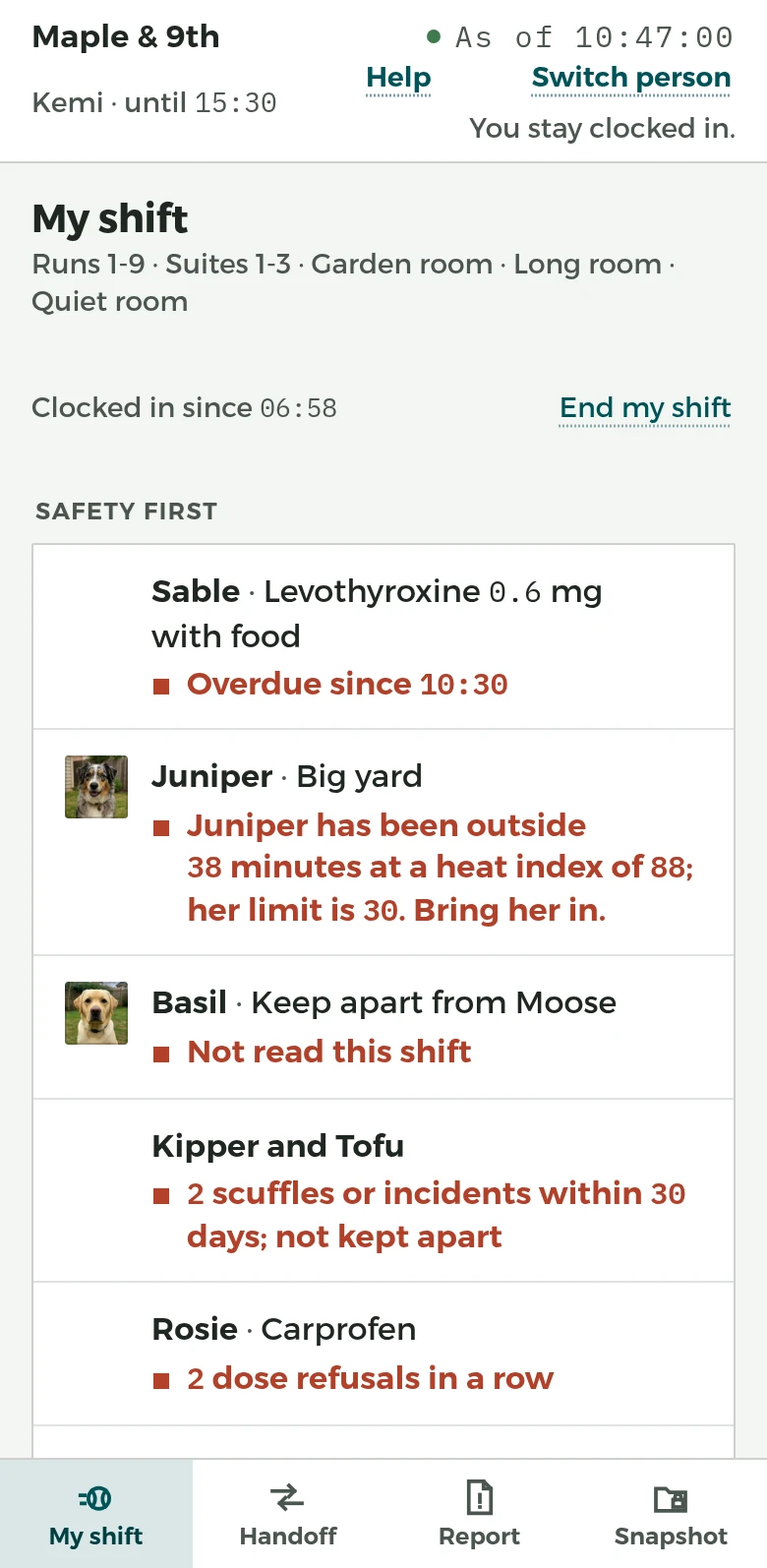
Different shifts can notice the same change.
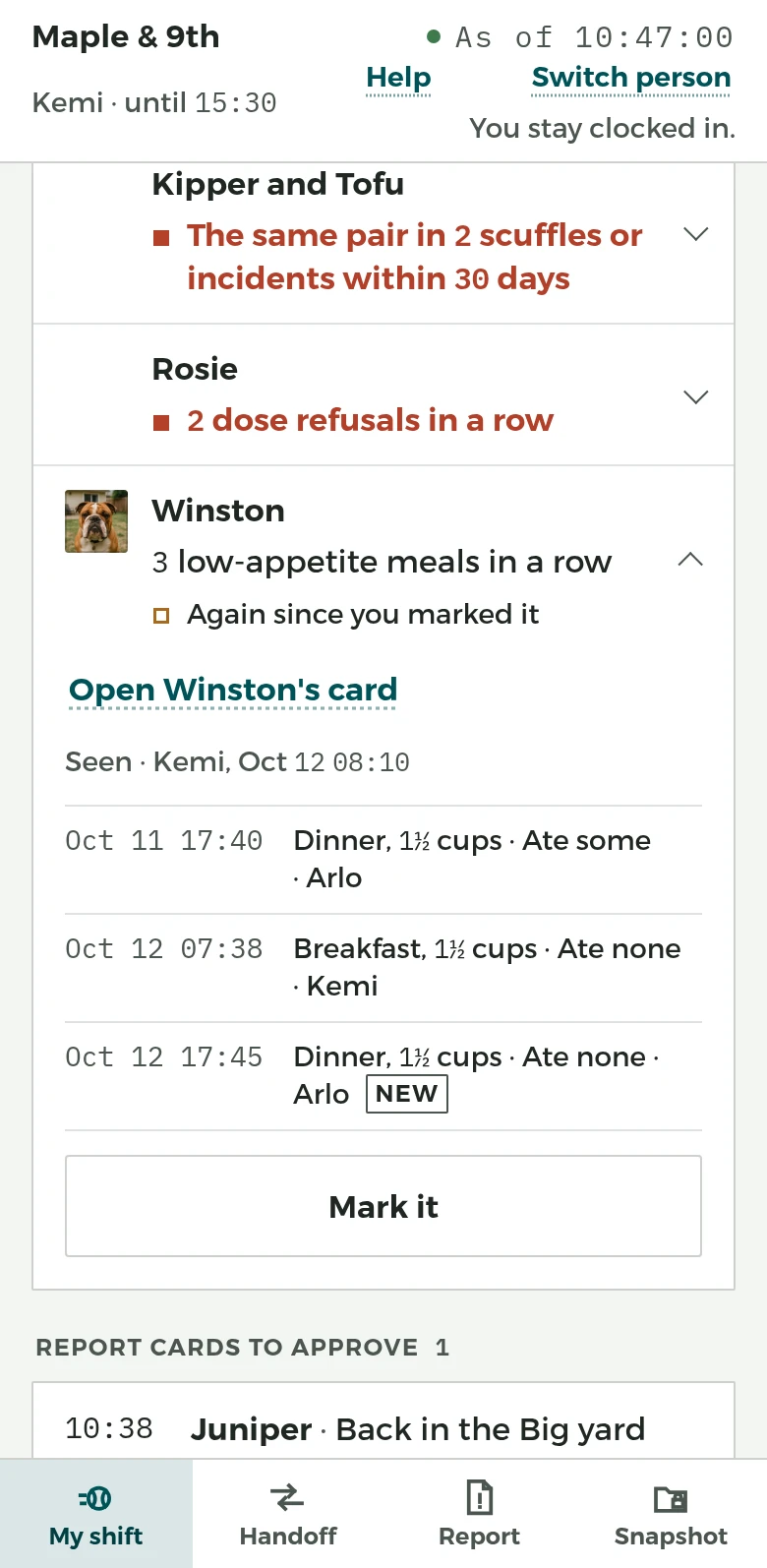
One person records a meal with little appetite. Another notices something similar on the next shift. TailTalk can connect repeated recorded observations so a lead can examine the pattern.
Meals, medication refusals, weight entries, pair incidents and optional observation chips can contribute under the configured rules. Open the dated source entries to understand what was actually recorded, by whom and when.
The original observations
Open the dated observations behind each pattern.
A human response
Record the follow-up, including a conversation, a call or a reason no concern was found.
New evidence
Later observations can bring a previously acknowledged pattern back for attention.
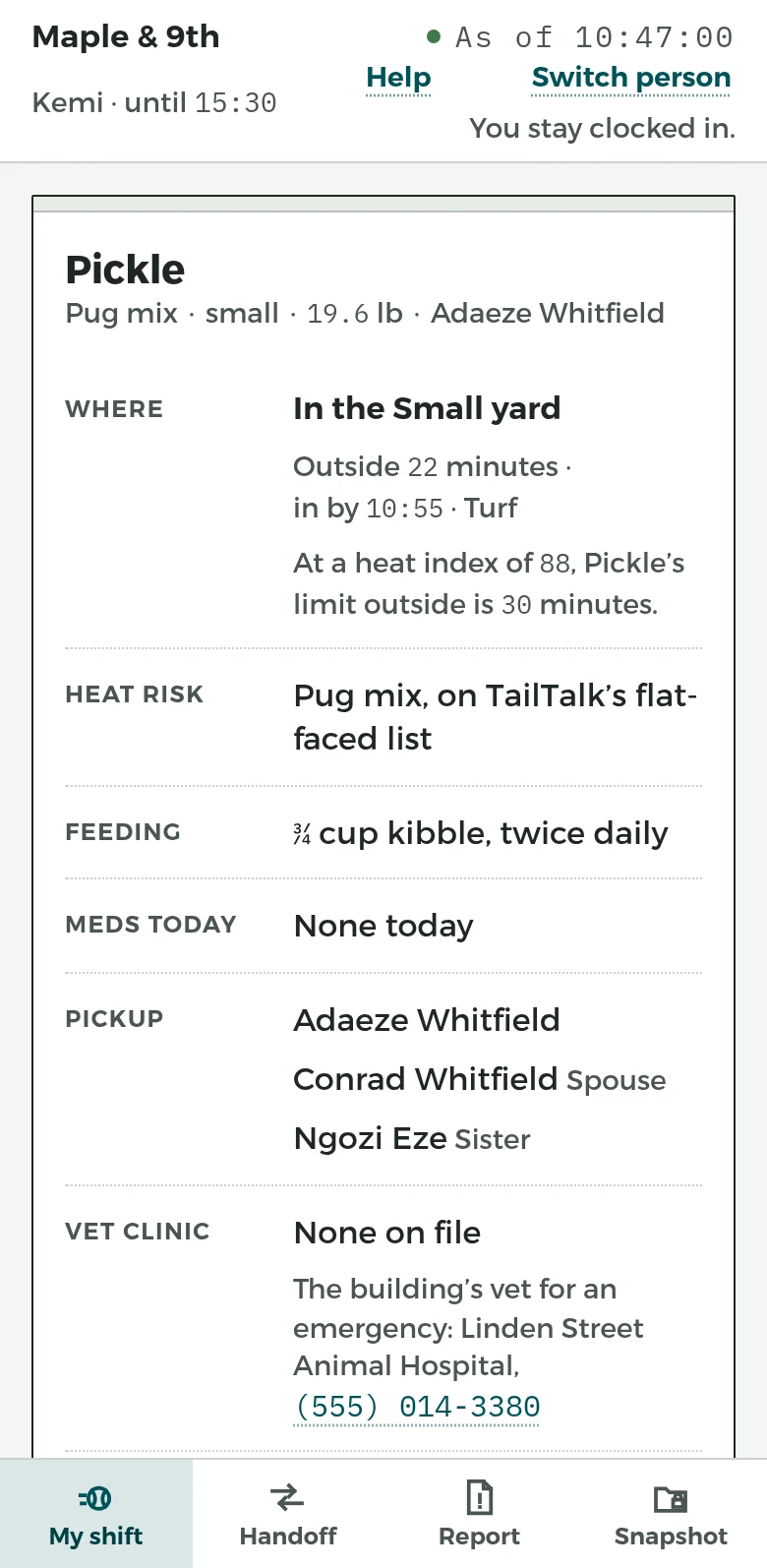
Outdoor guidance for this dog, in this yard.
The yard's surface and heat conditions matter, alongside the dog's age, breed and recorded risk factors. TailTalk uses facility settings and recorded movements to show outdoor-time guidance with the reason in view.
Individual heat alerts bring each dog’s outdoor time, risk factors and yard conditions into view, helping your team decide when it’s time for a break inside.
See the pattern across shifts.
A small change can be easy to miss when different people care for the same dog. TailTalk brings repeated observations together, with the original entries and follow-up in one place.
The follow-up can stay connected to the dog's working record and the next shift. People can understand both the concern and what has already been done.
A few practical questions.
Can a pattern return after it was acknowledged?
Yes. New evidence can reopen a pattern for attention while retaining the earlier follow-up.
How is outdoor time recorded?
Recorded moves between spaces build each dog’s outdoor-time history. The care card brings that time together with yard conditions and the dog’s individual heat guidance.
A company
you can talk to.
Take a look around the bookings, care and business tools built for your day.
20 minutes. Video or phone.
Book a demo